Choosing the right flooring system is one of the most impactful decisions a property owner or manager can make. The floor takes more abuse than any other surface in a building. It handles foot traffic, rolling equipment, chemical spills, moisture, and daily wear year after year. Get the choice wrong, and you’ll spend thousands on premature repairs and replacements.
If you’ve been researching polished concrete vs. epoxy flooring, you’ve probably seen articles that treat them as equal options. They’re not. For the vast majority of real-world applications, especially in San Diego’s multifamily, commercial, and residential markets, professional epoxy flooring delivers better protection, better value, and more practical advantages than polished concrete.
At Double G Painting & Contracting, we’ve installed epoxy flooring systems in apartment complexes, parking garages, commercial kitchens, warehouses, and residential properties across San Diego County for over 20 years. We’ve also seen what happens when property owners choose the wrong flooring system. This guide shares what we’ve learned from thousands of real installations so you can make a confident, informed decision.
What Is Epoxy Flooring and How Does It Work?
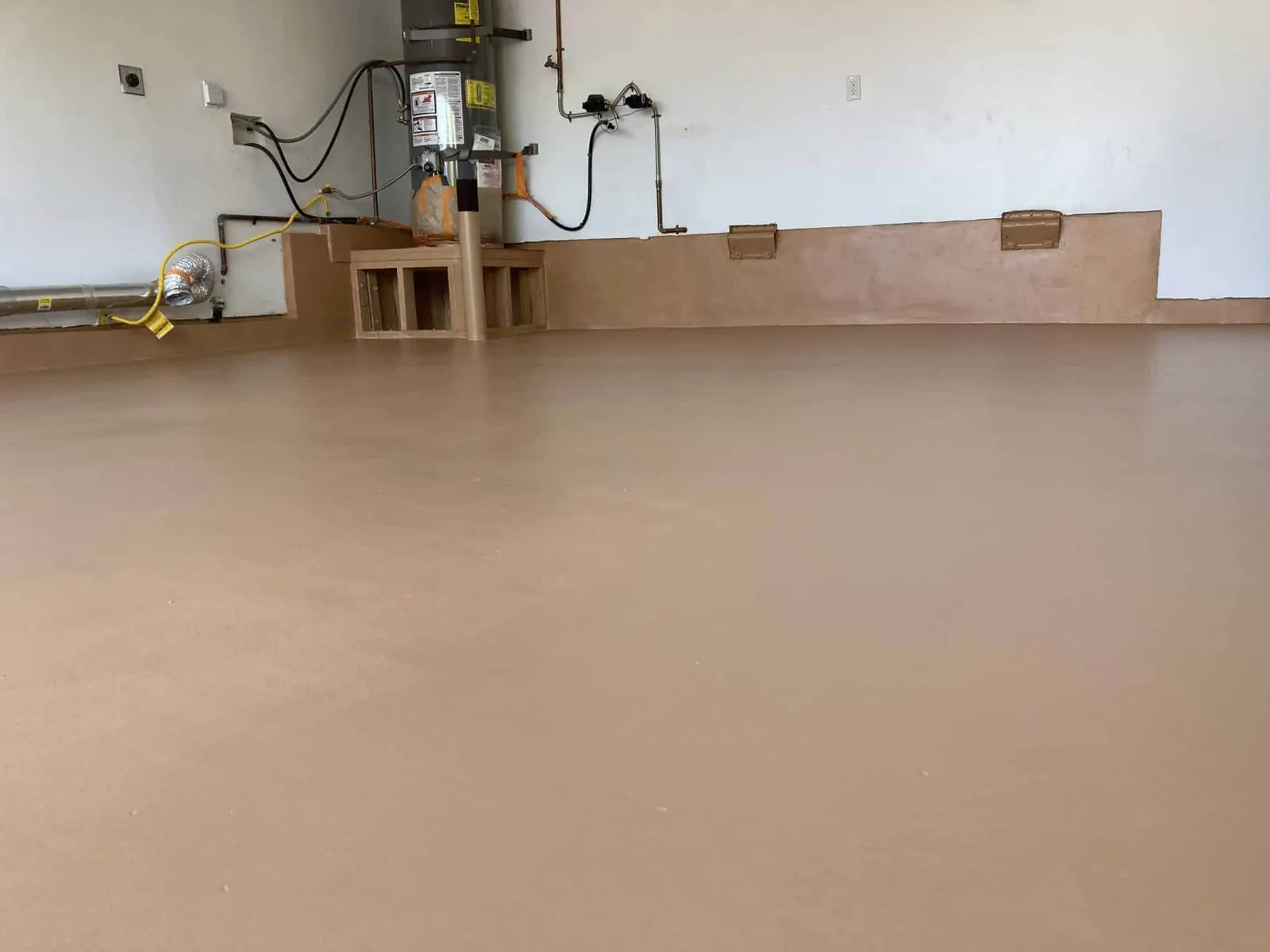
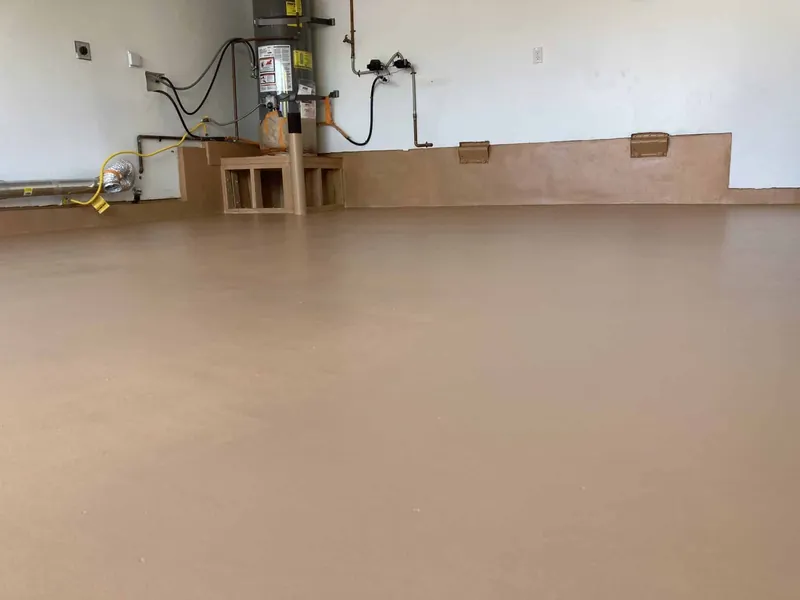
Epoxy flooring is a high-performance coating system applied directly over concrete. It’s created by mixing a resin component with a chemical hardener, triggering a reaction that forms an incredibly strong, bonded surface. The result is a floor that’s harder, more durable, and more resistant to damage than the concrete beneath it.
A professional epoxy flooring installation involves multiple layers, each serving a specific purpose:
- Primer coat: Penetrates the concrete to create a strong adhesion base
- Body coat (one or two layers): The main epoxy layer that provides chemical resistance, impact protection, and color
- Decorative elements (optional): Vinyl flakes, quartz broadcast, metallic pigments, or custom patterns
- Topcoat: A clear polyurethane or polyaspartic layer that adds UV protection, scratch resistance, and adjustable slip control
This multi-layer approach is what separates professional epoxy from the cheap hardware store kits that give epoxy a bad reputation. Commercial-grade systems create a surface that’s 3 to 10 times thicker than DIY products, with dramatically better performance and longevity.
How Does Polished Concrete Compare?
Polished concrete takes a different approach entirely. Instead of applying a coating, the existing concrete slab is mechanically ground using progressively finer diamond abrasives until it reaches a smooth, reflective finish. A chemical densifier hardens the surface, and a penetrating sealer provides some protection against staining.
It’s an elegant process that works well in specific scenarios. But here’s the critical difference: polished concrete has no protective layer on top. The concrete itself is the finished surface. That means every chemical spill, oil drip, and impact hits the actual floor material. There’s nothing standing between the concrete and whatever gets thrown at it.
Epoxy, by contrast, creates a sacrificial shield. The coating absorbs the damage so the concrete doesn’t have to. When the coating eventually wears, you can recoat it. With polished concrete, damage is permanent and far more expensive to repair.
Head-to-Head: Why Epoxy Wins in 7 Out of 10 Categories
Let’s look at the numbers side by side. In almost every performance category that matters for daily use, epoxy comes out ahead.
| Performance Factor | Polished Concrete | Epoxy Flooring |
|---|---|---|
| Upfront Cost | $3 to $15/sq ft | $3 to $12/sq ft Lower Cost |
| Chemical Resistance | Moderate (stains easily) | Excellent Winner |
| Impact Resistance | Cracks under heavy impacts | Absorbs impacts Winner |
| Slip Resistance | Poor when wet | Fully adjustable Winner |
| Customization | Limited | Unlimited colors and patterns Winner |
| Moisture Protection | Minimal (surface sealer only) | Full barrier Winner |
| Installation Speed | 5 to 7 days | 2 to 5 days Faster |
| Concrete Protection | None (concrete is exposed) | Full protection Winner |
| Lifespan | 50+ years Longer | 15 to 20 years (recoatable) |
| Eco-Friendliness | High Greener | Moderate (low-VOC options) |
| Repairability | Difficult and expensive | Easy spot repairs Winner |
Polished concrete wins on raw lifespan and eco-friendliness. But in the categories that matter most to property owners managing real buildings with real tenants and real budgets, epoxy outperforms it consistently.
6 Reasons Epoxy Flooring Is the Better Investment
1. Lower Upfront Cost with Better Short-Term ROI
For renovation and retrofit projects, epoxy costs significantly less than polished concrete. A professional epoxy installation in San Diego typically runs $3 to $12 per square foot, while polished concrete can reach $15 per square foot or more for high-gloss finishes.
For multifamily property managers working within annual maintenance budgets, this cost difference is meaningful. You can resurface a 5,000 square foot parking garage, two laundry rooms, and a fitness center with epoxy for the same price polished concrete would cost in the garage alone.
✓ Real-World Cost Example
A 200-unit apartment complex in Mission Valley needed new flooring in its two-level parking structure (approximately 40,000 sq ft). Professional epoxy installation came in at $5.50/sq ft, totaling around $220,000. The polished concrete estimate for the same space was $11/sq ft, or $440,000. The epoxy system included chemical-resistant topcoats, anti-slip additives, and directional striping. The property saved over $200,000 while getting a floor better suited to parking garage conditions.
The bottom line: Epoxy stretches your renovation budget further and delivers a floor specifically engineered for the conditions it will face.
2. Superior Chemical and Stain Resistance
This is where the gap between epoxy and polished concrete becomes impossible to ignore. Epoxy creates a non-porous barrier that repels:
- Motor oil and transmission fluid
- Gasoline and diesel fuel
- Cleaning chemicals and degreasers
- Food and beverage spills
- Salt and de-icing compounds
- Hydraulic fluid and brake fluid
Polished concrete, even with a sealer, absorbs these substances over time. Oil stains on polished concrete are permanent. Acidic spills etch the surface. Once the sealer breaks down (which happens every two to three years), the concrete is completely exposed.
For parking garages in apartment communities, commercial kitchens, manufacturing facilities, and any space where chemical exposure is a reality, epoxy isn’t just the better choice. It’s the only practical choice.
3. Epoxy Protects Your Concrete Investment
Here’s something most comparison articles overlook: the concrete slab under your floor is one of the most expensive structural components of your building. Epoxy protects that investment. It seals out moisture that causes rebar corrosion. It prevents freeze-thaw damage in unheated spaces. It stops chemical penetration that weakens concrete from within.
Polished concrete offers none of that protection. The concrete is the finish. Every bit of wear, every stain, every impact hits the structural material directly. Over time, this means more cracks, more spalling, and more expensive structural repairs.
When you install epoxy, you’re not just getting a floor surface. You’re adding a protective membrane that extends the life of the entire slab. For property owners who think in terms of long-term asset preservation, this is a significant advantage.
4. Unlimited Design and Customization Options
Epoxy flooring gives property owners creative control that polished concrete simply can’t match. Available options include:
- Solid colors: Match any brand, design scheme, or building palette
- Metallic effects: Swirling, three-dimensional patterns that mimic marble or molten metal
- Decorative flake systems: Multi-colored vinyl chips that hide minor imperfections and add texture
- Quartz broadcast: Durable, textured finishes ideal for commercial kitchens and wet areas
- Custom logos and graphics: Corporate branding, safety markings, and wayfinding directly in the floor
- Color zoning: Defined work areas, parking lanes, pedestrian paths, and safety zones
Polished concrete is limited to whatever the slab looks like once it’s ground down, plus optional acid stains or dyes. The results can be attractive in the right setting, but you’re working with the material you have rather than designing the floor you want.
For commercial properties where branding and first impressions matter, epoxy’s design flexibility is a major competitive advantage.
5. Adjustable Slip Resistance for Safer Surfaces
Polished concrete has a well-documented safety weakness: it becomes dangerously slippery when wet. The high-gloss finish that looks beautiful in a showroom turns into a liability risk in a kitchen, bathroom, parking garage, or any area exposed to water.
Epoxy solves this problem with built-in slip-resistance options. Anti-slip additives like aluminum oxide, quartz grit, or polymer beads can be incorporated into the topcoat at varying levels of aggressiveness. You choose the texture based on the space:
- Light texture for residential garages and lobbies
- Medium texture for commercial kitchens and restrooms
- Heavy texture for loading docks and industrial areas
For multifamily property owners managing liability risk, epoxy’s adjustable slip resistance helps meet ADA compliance requirements and reduces slip-and-fall incidents.
6. Easy, Affordable Repairs and Recoating
Every floor eventually shows wear. The question is: how expensive and disruptive is the repair process?
With epoxy, damaged sections can be spot-repaired without redoing the entire floor. A contractor can grind out the damaged area, apply a new coat, and blend it with the surrounding surface. When the entire floor needs refreshing after 10 to 15 years, a new topcoat restores it to like-new condition at a fraction of the original installation cost.
Polished concrete repairs are a different story. Cracks, chips, and stains are visible and permanent. Repairing damaged polished concrete requires grinding the entire area around the damage, re-densifying, and re-polishing through all grit levels. The repaired area rarely matches the original perfectly because the concrete itself has changed through use and exposure.
For property managers handling ongoing maintenance across multiple buildings, epoxy’s repairability keeps budgets predictable and minimizes tenant disruption.
Where Epoxy Flooring Excels: Property-by-Property Guide
Epoxy’s advantages aren’t theoretical. They translate directly into practical benefits for specific property types across San Diego.
✓ Apartment Complexes and Multifamily Properties
- Parking garages: Oil resistance, slip control, and striping in one system
- Laundry rooms: Waterproof surface that handles bleach and detergent spills
- Fitness centers: Impact-resistant floor that withstands dropped weights
- Common hallways: Durable, easy-clean surface for high foot traffic
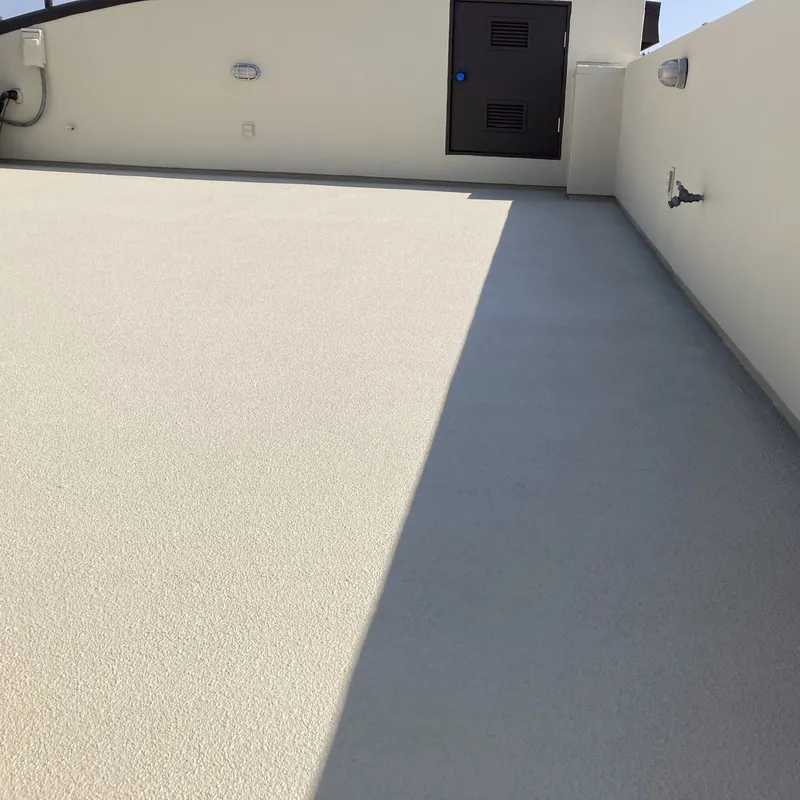
- Pool decks and patios: Textured epoxy with maximum slip resistance
Our apartment painting and flooring services coordinate both projects to minimize tenant disruption.
✓ Commercial and Industrial Properties
- Warehouses: Handles forklift traffic, chemical spills, and heavy loads
- Commercial kitchens: Seamless, sanitary surface meeting health codes
- Retail spaces: Brand-matching colors with decorative finish options
- Auto shops and service bays: Resists every automotive fluid
- Medical and dental offices: Hygienic, stain-proof, easy to sanitize
Pair your epoxy installation with commercial painting services for a complete property refresh.
✓ Residential Properties
- Garages: The #1 residential epoxy application, protecting against oil and stains
- Basements: Moisture barrier that prevents dampness and mold
- Workshops: Chemical-resistant surface for hobby and craft spaces
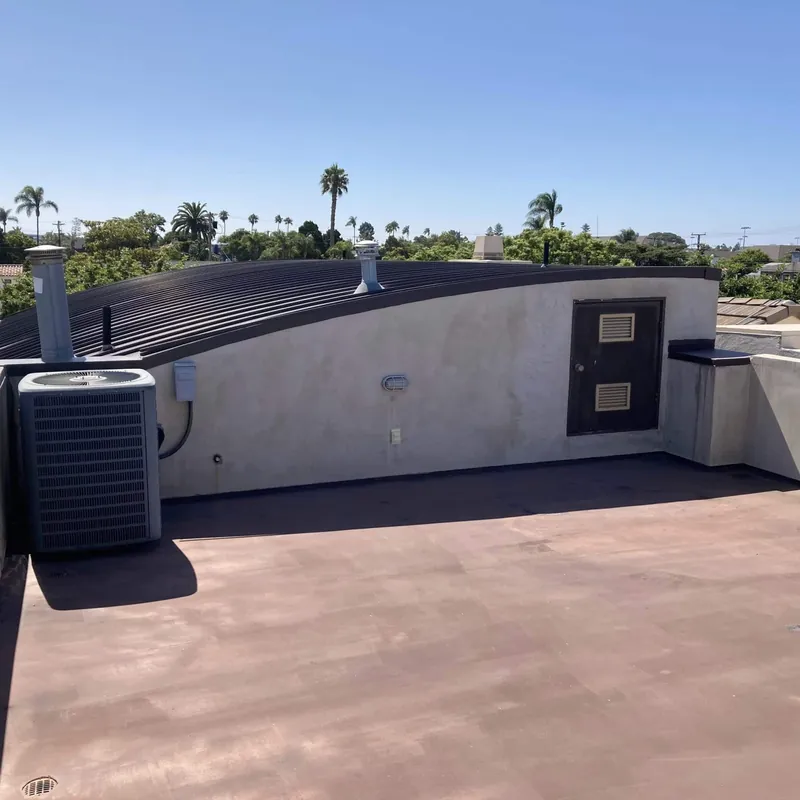
- Outdoor patios: UV-stable coatings that handle San Diego sunshine
- Utility rooms: Water-resistant, easy to clean, no grout lines
When Polished Concrete Makes Sense
To be fair, polished concrete has legitimate strengths in specific applications:
- New construction where the slab is in perfect condition and no additional materials are wanted
- High-end showrooms and lobbies where the industrial aesthetic is a design choice
- LEED-certified or green building projects where minimizing material use is a priority
- Historic building restorations where preserving original concrete adds character
But even in these scenarios, the floor will need ongoing sealer maintenance and won’t have any chemical or impact protection. For most San Diego property owners, the practical advantages of epoxy make it the smarter investment.
Why Epoxy Performs Especially Well in San Diego
San Diego’s climate creates conditions that amplify epoxy’s advantages over polished concrete.
Coastal Moisture and Salt Air Protection
Properties in La Jolla, Coronado, Point Loma, Pacific Beach, and Ocean Beach face constant exposure to salt-laden air and elevated humidity. This combination accelerates concrete deterioration through a process called chloride intrusion, where salt penetrates the concrete and corrodes the rebar inside.
Epoxy creates a sealed barrier that blocks salt and moisture from reaching the concrete. This is particularly critical for coastal multifamily properties where parking garage slabs and ground-level floors are most vulnerable. Polished concrete’s penetrating sealer provides minimal defense against sustained moisture exposure. It needs resealing every two to three years, and even then, it can’t match epoxy’s protective capability.
UV Stability with Modern Topcoats
San Diego averages 266 sunny days per year, and older epoxy formulations would yellow under UV exposure. Today’s polyaspartic and UV-stable polyurethane topcoats have eliminated this problem. Modern systems maintain their color and clarity for 15 to 20 years, even in direct sunlight.
At Double G Painting & Contracting, we exclusively use UV-resistant topcoat systems for any floor exposed to sunlight. This ensures our San Diego clients get full color stability regardless of their property’s sun exposure.
Seismic Flexibility
San Diego is in seismic zone 4, and building slabs shift during seismic events. Epoxy coatings have inherent flexibility that allows them to move with minor concrete shifts without cracking. Polished concrete, by contrast, shows every crack immediately because the concrete is the finished surface. Even small hairline cracks in polished concrete are visible and costly to repair.
Temperature Tolerance
While San Diego’s climate is mild, unheated parking garages and covered patios still experience temperature swings between daytime heat and cool evenings. Epoxy handles these thermal cycles without expanding, contracting, or losing adhesion. This thermal stability makes it ideal for year-round performance in exposed San Diego locations.
The Professional Epoxy Installation Process
Understanding what goes into a proper epoxy installation helps you evaluate contractors and set realistic expectations for your project. Here’s the step-by-step process our team follows at Double G Painting & Contracting.
Step 1: Surface Assessment and Moisture Testing
We evaluate the concrete’s condition, test moisture levels, identify cracks and repairs needed, and determine the right epoxy system for your property and usage requirements. This assessment is free and takes one to two hours for most projects.
Step 2: Concrete Preparation (Day 1)
This is the most important step. We use diamond grinding machines to remove contaminants, old coatings, and surface irregularities. The grinding creates a surface profile that allows the epoxy to bond mechanically to the concrete. Skipping or rushing this step is the #1 reason epoxy floors fail.
Step 3: Crack and Damage Repair (Day 1 to 2)
All cracks, spalls, divots, and expansion joints are filled and repaired with epoxy filler compounds. This creates a smooth, uniform base for the coating system.
Step 4: Primer Application (Day 2)
A penetrating epoxy primer seals the concrete pores and provides the foundation for the body coats. On highly porous concrete, two primer coats may be applied.
Step 5: Epoxy Body Coats (Day 2 to 3)
One or two layers of commercial-grade epoxy are applied. Decorative elements (flakes, quartz, metallic pigments) are broadcast into the wet epoxy at this stage. Each coat cures before the next is applied.
Step 6: Topcoat Sealer (Day 3 to 4)
A UV-stable polyurethane or polyaspartic topcoat seals the system. Slip-resistant additives are incorporated as needed. This final layer provides scratch resistance, chemical protection, and long-term color stability.
Step 7: Cure and Handover (Day 4 to 7)
Light foot traffic is typically safe within 24 hours. Full vehicle traffic and heavy use require 72 hours of curing. We provide detailed care instructions for the first 30 days and ongoing maintenance guidance.
✓ Timeline Comparison
Epoxy flooring: 3 to 5 days of active work, plus 2 to 3 days curing. Total: under one week for most projects.
Polished concrete: 5 to 7 days of active work, with some projects requiring 10+ days for large areas. Epoxy gets your space back into service faster, which matters for businesses and occupied apartment buildings.
Why DIY Epoxy Kits Fail (and Why Professional Installation Is Worth Every Dollar)
We need to address this directly because it’s the biggest source of frustration in our industry. Hardware store epoxy kits priced at $100 to $300 have given epoxy flooring an undeserved reputation for peeling and failing. The product isn’t the problem. The process is.
5 Reasons DIY Epoxy Fails
- No surface preparation: DIY kits include a small bottle of acid etch. This provides maybe 30% of the surface profile that diamond grinding achieves. The epoxy can’t bond properly and peels within months.
- Water-based formulas: Most kits use water-based epoxy that’s 50 to 70% thinner than commercial solvent-based or 100% solids systems. Thinner coatings wear through faster and offer less protection.
- No moisture testing: Concrete with excess moisture vapor causes bubbling, delamination, and coating failure. Professionals test for this. DIY installers don’t.
- Single coat application: Kits provide one thin coat with no primer and no topcoat. Professional systems use three to five layers, each serving a distinct protective function.
- No UV protection: Without a UV-stable topcoat, the epoxy yellows and chalks within one to two San Diego summers.
Professional epoxy flooring contractors use commercial equipment, commercial-grade materials, and installation techniques refined over thousands of projects. The result lasts five to ten times longer than any DIY kit. That’s not marketing. That’s 20 years of on-the-ground experience talking.
How to Choose a San Diego Epoxy Flooring Contractor
The quality of your epoxy floor depends directly on the contractor you hire. Here’s what to look for when selecting an epoxy flooring company in San Diego:
- Active California contractor’s license: Verify the license number through the CSLB website. Unlicensed work puts you at legal and financial risk.
- Proof of insurance: General liability and workers’ compensation insurance protect you from liability during the project.
- Specific epoxy experience: General contractors sometimes offer epoxy as a side service. Look for teams that install epoxy regularly and can show you completed projects similar to yours.
- Transparent material specifications: A good contractor names the exact products they’ll use, including brand, product line, and thickness. Be cautious of anyone who says “premium epoxy” without specifics.
- Diamond grinding as standard: Any contractor who relies solely on acid etching for surface preparation is cutting corners. Diamond grinding is the industry standard for a reason.
- Detailed written estimates: The proposal should itemize surface preparation, materials, decorative elements, labor, and timeline. Verbal quotes and vague one-line estimates are red flags.
- Warranty on materials and labor: Reputable contractors stand behind their work. Ask about warranty terms and what’s covered.
At Double G Painting & Contracting, every epoxy project includes a detailed written proposal, commercial-grade materials with manufacturer specifications, diamond grinding preparation, and a satisfaction guarantee. Our full contracting services mean we can also handle any concrete repairs, painting, or building maintenance needed alongside your flooring project.
Epoxy Flooring as Part of Your Property Maintenance Strategy
Smart property owners treat flooring upgrades as part of a coordinated improvement plan. Here’s how epoxy flooring integrates with other property maintenance projects.
Multifamily and Apartment Complexes
Scheduling epoxy installation alongside multifamily painting services reduces total project costs and minimizes tenant disruption. When our crews are already on site painting building exteriors and common areas, adding a parking garage epoxy project shares mobilization costs, equipment logistics, and project management overhead.
For apartment unit turnovers, epoxy flooring in kitchens, bathrooms, and patios paired with fresh interior paint creates a move-in-ready unit that commands higher rents and attracts better tenants. It’s an upgrade that pays for itself within the first lease term.
Commercial Property Renovations
A new epoxy floor paired with updated commercial painting transforms a tired building into a professional, modern space. For retail and restaurant properties, this combination creates the clean, polished environment customers expect. For office and medical properties, it demonstrates the attention to quality that clients and patients notice immediately.
Historic and Restoration Projects
San Diego’s historic homes and buildings sometimes need flooring solutions in workshops, garages, and utility spaces that won’t affect the property’s historical character. Epoxy in these functional areas protects concrete and improves usability while restoration work preserves the home’s period-appropriate finishes in visible living spaces. It’s the practical complement to preservation-focused improvements.
20-Year Cost Analysis: Epoxy Saves More Than You Think
Let’s look at what each flooring system actually costs over 20 years for a typical 2,000 square foot commercial space in San Diego. These numbers reflect real project data from our installations.
| Cost Category | Polished Concrete | Epoxy Flooring |
|---|---|---|
| Initial Installation | $14,000 to $30,000 | $6,000 to $16,000 Lower |
| Annual Maintenance | $400 to $800/year | $300 to $600/year |
| Resealing (every 2 to 3 yrs) | $1,600 to $3,000 per cycle | N/A |
| Topcoat Refresh (every 7 yrs) | N/A | $2,500 to $5,000 per cycle |
| Stain/Damage Repairs | $2,000 to $5,000 (permanent stains) | $500 to $1,500 (spot recoating) |
| 20-Year Estimated Total | $30,000 to $55,000 | $18,000 to $36,000 Best Value |
Over 20 years, epoxy flooring costs 30 to 40% less than polished concrete when you factor in the higher installation price, frequent resealing, and expensive damage repairs that polished concrete requires. Polished concrete’s longer theoretical lifespan only becomes a cost advantage if the concrete stays in perfect condition for 30+ years, which rarely happens in high-traffic commercial and multifamily environments.
✓ The Recoating Advantage
When an epoxy floor reaches the end of its service life, you don’t tear it out. You recoat it. A professional topcoat refresh costs 40 to 60% less than the original installation and extends the floor’s life by another 10 to 15 years. Polished concrete that’s damaged needs expensive re-grinding and re-polishing, and the results are never as uniform as the original.
Frequently Asked Questions About Epoxy Flooring
How long does professionally installed epoxy flooring last?
Commercial-grade epoxy flooring installed by a professional contractor typically lasts 15 to 20 years or more under standard conditions. High-traffic environments like parking garages and warehouses may need a topcoat refresh every 5 to 7 years, but the base system remains intact far longer. This durability far exceeds DIY kits, which often fail within 2 to 3 years. The key factors are proper surface preparation, quality materials, and professional application.
What is epoxy flooring used for in apartments and commercial buildings?
Epoxy flooring is used in parking garages, laundry rooms, fitness centers, lobbies, commercial kitchens, warehouses, and retail spaces. It creates a chemical-resistant, impact-proof surface that handles heavy foot and vehicle traffic while remaining easy to clean. For multifamily properties, it protects concrete in high-use areas and significantly reduces long-term maintenance costs compared to other flooring options.
How much does epoxy flooring cost in San Diego?
Professional epoxy flooring in San Diego costs between $3 and $12 per square foot, depending on the system type and surface preparation required. A standard two-car garage typically runs $2,000 to $4,500. Multifamily and commercial projects vary based on total square footage, condition of the existing concrete, and the specific epoxy system chosen. Always request a written estimate that itemizes materials, preparation, and labor separately.
Is epoxy flooring better than polished concrete for garages?
Yes, epoxy flooring is the better choice for garages. It resists motor oil, gasoline, brake fluid, and chemical spills that would stain polished concrete permanently. Epoxy also provides adjustable slip resistance, absorbs impacts from dropped tools, and offers customizable colors and finishes. Polished concrete in a garage setting requires constant maintenance to prevent staining and offers no meaningful chemical protection against automotive fluids.
How often should multifamily properties update their epoxy floors?
In most multifamily properties, epoxy floors should receive a topcoat refresh every 5 to 7 years in high-traffic areas like parking garages and common rooms. Lower-traffic areas may go 10 to 15 years before needing attention. Annual inspections and routine cleaning extend the life of the system and help property managers plan maintenance budgets effectively. Contact our apartment services team for a maintenance schedule tailored to your property.
Ready to Install Epoxy Flooring That Lasts?
Double G Painting & Contracting is San Diego’s trusted epoxy flooring contractor. Over 20 years of experience. Commercial-grade materials. Professional results guaranteed. Get a free estimate for your property today.